Mobile Fogging Machine
The AutoJet® Mobile Fogging Machine revolutionizes fumigation and humidification in enclosed spaces. Designed for efficiency, it generates a uniform fog that effectively reaches even the most challenging areas and surfaces. This portable system is easy to set up and operate, eliminating the need for expensive, high-maintenance, high-pressure pumps.

System Overview
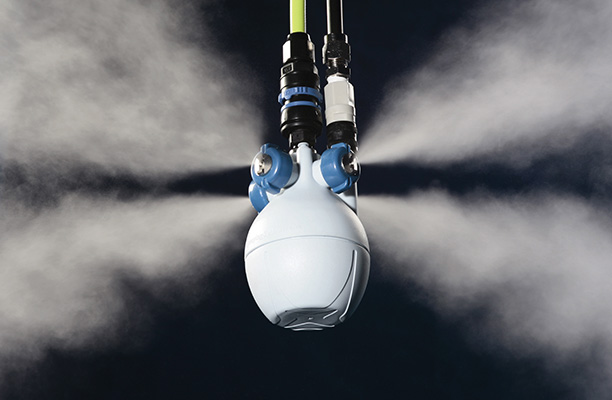
- Two-fluid 1/4 J air atomizing nozzles use compressed air to shatter a liquid and produce very small drops that evaporate quickly. Liquid siphon set-ups draw the liquid through the feed line into the air flow for atomization.
- The nozzles are placed downstream of high-velocity venturi blower fans to amplify the effective reach of spray. The spray distance is approximately 30m (98 ft).
- A wide range of spray set-ups is available for use in many applications.
- An AutoJet controller with an intuitive touch interface enables easy operation.
Ideal for...
Antimicrobial spraying

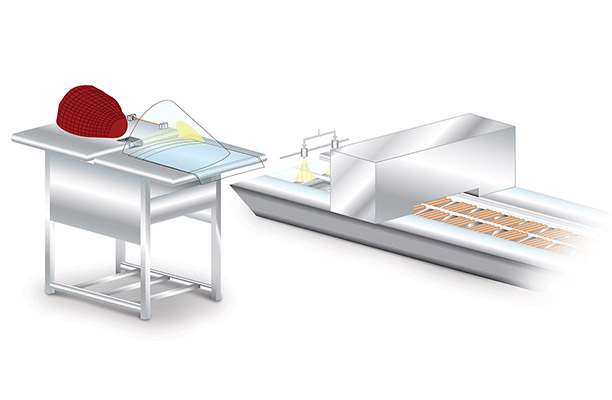
Maintaining hygiene in food and beverage plants and industrial kitchens is crucial for preventing contamination and ensuring food safety. Spraying antimicrobials is an effective method to eliminate harmful bacteria, viruses, and fungi from surfaces, equipment, and processing areas.
Greenhouse humidification and fumigation
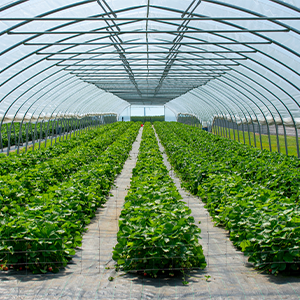 Maintaining proper humidity levels in a greenhouse is essential for plant growth, preventing dehydration, and reducing stress. A humidification method such as the mobile fogging machine helps to regulate moisture and create an optimal microclimate.
Fumigation on the other hand is crucial to maintain for pest and disease control. The mobile fogging machine provides the right amount of natural agent on the right time.
Together, humidification and fumigation contribute to a healthier greenhouse environment.
Humidification
 Humidification plays a vital role in maintaining air quality, health, and environmental balance.
It plays a crucial role in preserving materials, ensuring efficient production processes.
Evaporative cooling
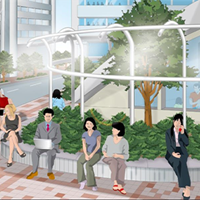 Evaporative cooling is an energy-efficient method of reducing air temperature by using the natural process of water evaporation. As warm air passes through water-saturated pads or mist, heat is absorbed, lowering the air temperature.

Controller Options
We offer four controller options that fit our system perfectly:
- Basic controller without HMI
- Basic controller without HMI, but with compressor
- Advanced controller with HMI
- Advanced controller with HMI and compressor

How The System Works
Compressed air and liquid mix in the nozzles to create fine atomized droplets. A 20L tank siphon-feeds liquid, while an optional built-in compressor or external air source powers the system. A hydraulic option eliminates compressed air, producing finer droplets in a hollow cone spray.
High-velocity fans project atomized liquid, ensuring uniform fog distribution.
The AutoJet controller sets spray cycles and timers via a touch panel in a NEMA 4X (IP54) enclosure.
The spray nozzles feature a durable stainless steel body and food-grade materials. They come in various configurations to support a wide range of flow rates.
The Mobile Fogging Machine is on casters and can be easily moved throughout a facility.