



Lubrication Application Process
The lubrication process in industrial manufacturing requires a controlled application of a thin fluid film, such as a lubricant, release agent, or corrosion inhibitor, to reduce friction, prevent sticking, protect surfaces, and improve material handling. When the film is applied consistently and on-target, operations see fewer defects, longer tool life, cleaner equipment, and lower fluid consumption.
A common misnomer is that “more is better” when applying lubricants. Not only is this false, it leads to unnecessary increase in costs and can also create avoidable hazards. Too much lubricant can create dripping, residue, smoke, slip hazards, and downstream contamination. Alternatively applying too little has its own set of challenges. When there is too little film it can cause friction, wear, and product damage.
Key Elements of Successful Lubrication Application
The best lubrication results come from controlling several fundamentals. Focus on applying the minimum effective film, delivering uniform coverage, keeping spray on-target, and maintaining consistency as conditions change.
Spraying Systems Co. works alongside you to develop the process that best suits your needs.
- Define the Goal: What are you trying to achieve and where.
- Select Spray Methods: Matching the pattern and droplet sizing to match requirements for film thickness and expected performance.
- Determine Placement & Timing: This includes considerations such as angle, distance, and triggering to stay on target and minimize overspray.
- Control & Standardize: Once the process is implemented, consideration to adapt to maintaining application rates as conditions change so results are defined and repeatable.
Performance Results
The best lubrication results come from controlling a few fundamentals. Focus on applying the minimum effective film, delivering uniform coverage, keeping spray on-target, and maintaining consistency as conditions change.

Lower Lubricant Consumption

Fewer Defects, Better Quality

Reduced Residue, Less Cleanup

Reduced Maintenance Time
Lubrication by Industry
Food & Beverage

In food and beverage environments, lubrication overlaps with release and anti-stick requirements on conveyors, guides, chains, and equipment surfaces that must keep moving reliably at production speeds. The goal is effective lubrication with minimal, controlled application that reduces buildup and prevents unnecessary mess. Over-application increases residue, lengthens washdown time, and raises the risk of overspray reaching product zones or other sensitive areas, so how precisely the lubricant is applied has a direct effect on both uptime and food safety.
Applied across conveyor and chain lubrication, guide and equipment surfaces, and pan and mold release, controlled spray lubrication delivers a consistent, on-target film that reduces friction and sticking without the dripping and residue that manual or flooded methods create. Automated, targeted application supports sanitation efficiency and helps keep lubricants out of product zones. The result is smoother running lines, simpler washdown, lower lubricant consumption, and better support for food safety practices from the first run to the last.
Steel & Metals
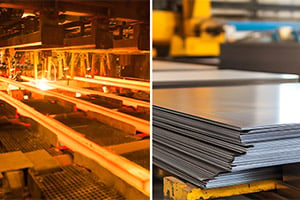
Steel and metal forming operations rely on lubrication and release agents across rolling, stamping, forming, roll forming, and wire and tube processes, where friction and sticking drive tool wear, defects, and downtime. Applications include spraying release agents onto caster rolls in cold rolling, oiling strip and sheet before forming, and applying corrosion inhibitors to protect finished surfaces. A thin, uniform film in the right place reduces friction and protects both the material and the tooling, while too much lubricant creates dripping, smoke, and slip hazards, and too little causes wear and product damage.
Applied across roll cooling and oiling, metal stamping, roll forming, and corrosion protection, controlled spray lubrication delivers precise, uniform coverage that adjusts to line speed and part geometry. Accurate placement with minimal overspray and misting reduces lubricant consumption, decreases maintenance downtime, and improves worker safety. The result is longer tool life, fewer rejects, cleaner equipment, and lower operating costs across forming and finishing operations.
Engineered Wood
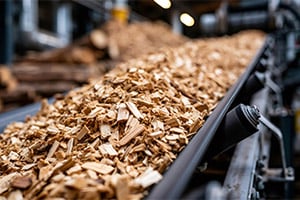
Engineered wood manufacturing uses lubrication and release agents in molding, forming, pressing, cutting, and handling steps, were sticking and wearing drive scrap and downtime. Release agents keep panels, mats, and boards from sticking to belts and tooling, while lubrication protects contact surfaces and keeps handling equipment running. Because dust and debris accelerate accumulation, controlled, targeted application matters, since over-application increases buildup on tooling and contact surfaces and adds to cleanup.
Applied across mold and belt release, tooling and contact-surface lubrication, and conveyor and handling equipment, consistent spray application supports stable production by reducing scrap and preventing buildup. When lubrication is controlled and repeatable, tooling stays in spec longer and production interruptions drop. The result is fewer defects, less manual cleanup, longer equipment life, and more stable throughput across the panel production process.
Can Production
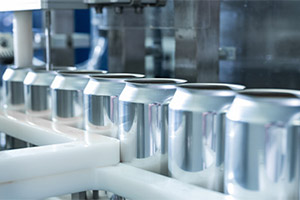
Can manufacturing depends on reliable chain and conveyor lubrication to keep high-speed lines and pin oven conveyors moving without breaks or unplanned stops. Chain-driven conveyors carry cans through washing, coating, and curing at high speed, so the lubrication point between the pin, and bushings must receive a consistent, on-target film. Flooded or imprecise oiling wastes lubricant, creates oil mist, and raises the risk of product contamination, while too little lubrication leads to chain wear and breaks that stop the line.
Applied across chain oil lubrication, conveyor handling, and pin oven conveyors, controlled spray lubrication delivers precise, single-point application with high transfer efficiency. Accurate placement reduces oil consumption and chain breaks, limits mist and overspray, and helps prevent product contamination on can lines. The result is longer chain life, less downtime, cleaner operation, and lower operating costs across the can production line.
Vehicle Manufacturing

Vehicle manufacturing uses lubrication and release agents across stamping, forming, and material handling, where friction and sticking drive tool wear, defects, and downtime. Applications include oiling strips and blanks before stamping and forming, lubricating dies and tooling, and keeping conveyors and handling equipment moving through the plant. A controlled, uniform film reduces friction and protects tooling and parts, while over-application creates dripping, residue, and slip hazards, and under-application causes wear and rejects.
Applied across metal stamping and forming, die and tooling lubrication, and conveyor and handling equipment, controlled spray lubrication delivers precise coverage that matches line speed and part geometry with minimal overspray and misting. Accurate application reduces lubricant consumption, cuts maintenance downtime, and improves worker safety. The result is longer tool life, fewer rejects, cleaner equipment, and more stable day-to-day operation across forming and assembly.
Featured Lubrication Products

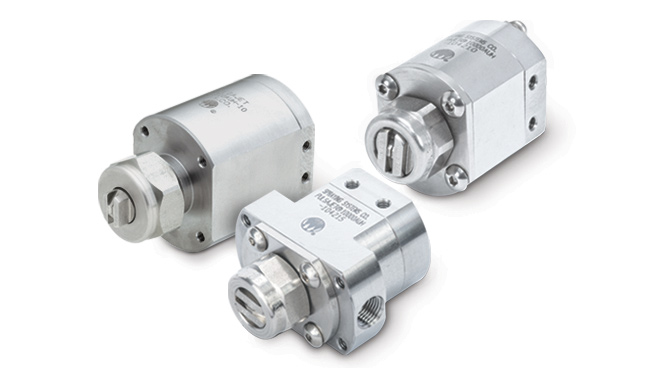
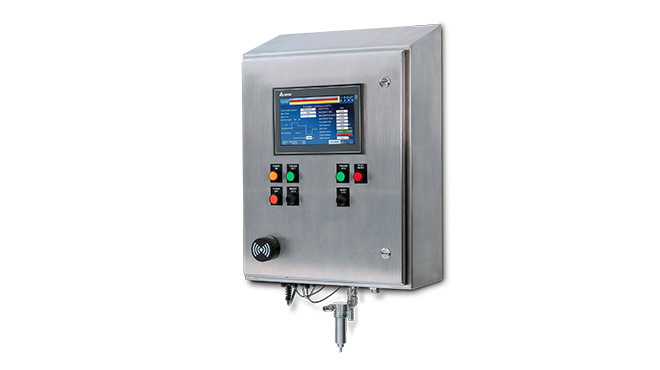
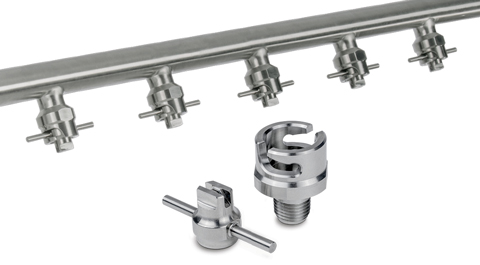
Precision Spray Control for Lubrication
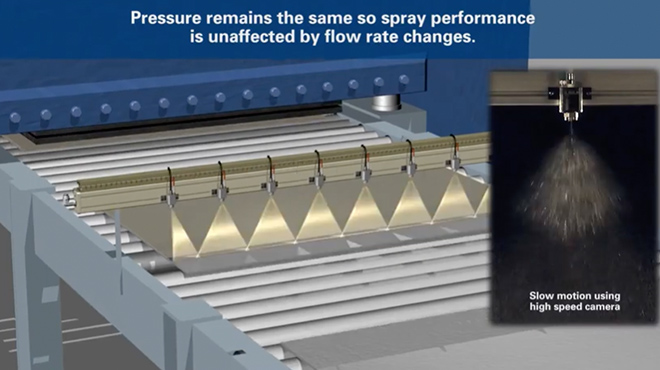
When production speeds vary, product widths change, or application targets get tighter, manual adjustments and pressure-based flow changes can introduce variation. Precision Spray Control (PSC) solves this by controlling flow rate through rapid on/off cycling, so the flow often appears constant. Pressure remains constant, allowing for flow rate changes without changing spray performance.
For lubrication, that matters because it helps keep coverage uniform while your process changes, such as:
- Line speed increases and decreases.
- Different part sizes or blank widths.
- Multiple lubricant viscosities across seasons or shifts.
- Tight limits on carryover before downstream welding, bonding, coating, or packaging.


