

Spray Applications for Waste to Energy
Waste to Energy facilities depend on precise, reliable spray technology to maintain combustion stability, control emissions, and protect downstream equipment throughout the flue gas treatment train. From reagent injection and gas cooling to acid gas scrubbing and DeNOx processes, spray performance directly affects plant availability, regulatory compliance, and operational efficiency. Spraying Systems Co. delivers application-specific spray solutions engineered for the demanding thermal, chemical, and process conditions found in Waste to Energy operations across Europe.




Waste Incineration
Incineration of heterogeneous waste streams generates flue gas with highly variable temperature, composition, and particulate loading, placing demanding performance requirements on spray systems throughout the combustion and gas treatment zones. Spraying Systems Co. provides spray nozzles and injection systems engineered for reliable operation in high-temperature, corrosive, and dirty environments, supporting combustion stability, ash conditioning, and protection of downstream equipment. Our nozzles are selected and configured to maintain consistent spray coverage and flow performance across variable process conditions, reducing the risk of thermal damage, equipment fouling, and unplanned maintenance. The result is improved plant availability and a stable foundation for the downstream flue gas treatment processes that depend on consistent conditions at the incinerator outlet.
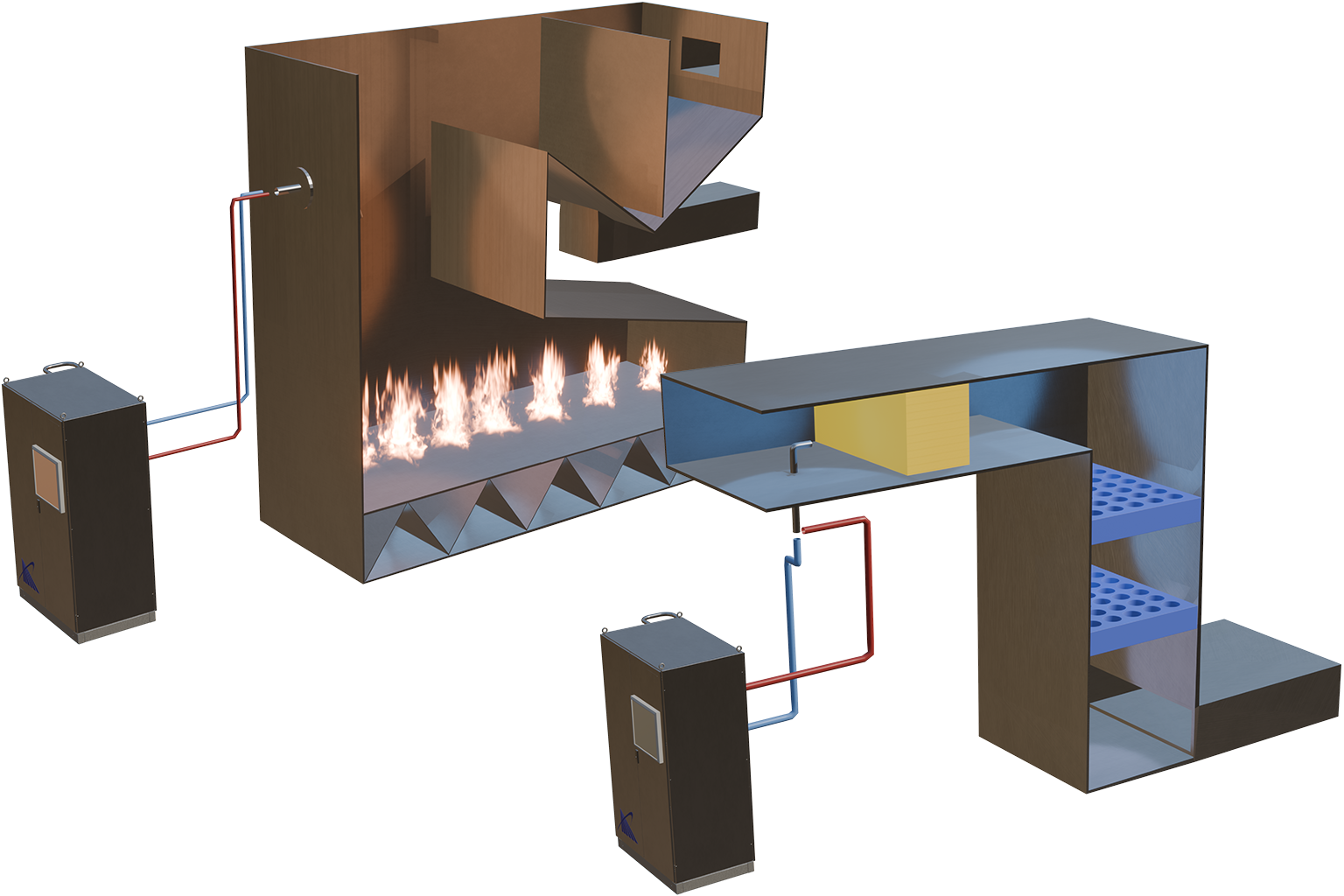
Denitrification (DeNox) for Waste to Energy
NOx control in Waste to Energy facilities requires the precise injection of ammonia or urea reagent into the flue gas stream within a defined temperature window, where reagent droplets must evaporate completely and mix uniformly with the gas to achieve effective NOx reduction. Incorrect droplet size, poor spray penetration, or insufficient coverage across the duct cross-section leads to reagent slip, elevated stack emissions, and higher operating costs. Spraying Systems Co. designs DeNOx injection systems with engineered droplet size distributions, lance configurations, and spray angles that are matched to the specific flue gas conditions, flow velocities, and temperature profiles in SNCR applications. The outcome is improved NOx reduction efficiency, reduced reagent consumption, and sustained emissions compliance across variable operating conditions.

Gas Conditioning and Quenching for Waste to Energy
Flue gas leaving the incinerator must be cooled rapidly and uniformly before entering downstream treatment equipment such as bag filters, electrostatic precipitators, and scrubbers, where operating temperatures must remain within defined limits to protect equipment integrity and process performance. Incomplete evaporation, wall wetting, or temperature non-uniformity in the conditioning stage can cause corrosion, scaling, and premature failure of downstream components. Spraying Systems Co. provides gas conditioning and quenching spray systems optimized for complete droplet evaporation within the available residence time, uniform temperature distribution across the gas duct, and minimal wall wetting under all operating conditions. Our solutions protect capital equipment, reduce corrosion risk, and ensure that downstream treatment systems receive gas at the conditions they are designed to handle.
Find out more about Gas Conditioning and Quenching for Waste to Energy.

Gas Scrubbing for Waste to Energy
Wet and semi-dry scrubbing systems in Waste to Energy plants rely on efficient gas-liquid contact to remove acid gases such as hydrogen chloride and sulfur dioxide, along with residual particulates and trace contaminants from the flue gas stream. Poor liquid distribution, nozzle plugging, or uneven spray coverage reduces removal efficiency, increases chemical consumption, and can result in emissions exceedances. Spraying Systems Co. supplies scrubber spray headers, atomizing nozzles, and distribution systems designed to deliver consistent liquid coverage across the full scrubber cross-section under continuous operating conditions. Nozzle materials and designs are selected for resistance to the corrosive and abrasive conditions present in wet scrubbing environments, supporting sustained scrubbing performance, reduced maintenance requirements, and reliable compliance with acid gas emissions limits.

Contact Your Process Technologies Spray Specialist
With 15+ years of experience in process technologies, Roger Makhoul helps plants across oil & gas, fertilizer manufacturing, power generation, waste to energy, and chemical processing optimize their spray applications - from gas conditioning and emissions control to quenching, scrubbing, and injector system design. Working alongside our local spray specialists and spray labs, he'll guide you to validated nozzle, injector, and control solutions tailored to your process conditions and performance targets.
Click here to contact your Process Technologies Spray Expert and discuss the best solution for your needs.

Industrial Spray Applications Overview
- Food Processing Spray Applications
- Process Technologies Spray Applications
- Pulp and Paper Industry Spray Applications
- Steel and Non-Ferrous Metals Spray Applications
- Engineered Wood Spray Applications
- Glass Manufacturing Spray Applications
- Spray Applications for Electronics
- Spray Applications for Transportation Industries
- Fire Protection Spray Applications
- Insulation Spray Applications
- Tiles Manufacturing Spray Applications