

Tank Cleaning and Safety in the Kraft Recovery Process

15
Jul 26
The kraft recovery process is one of the most effective examples of sustainability in modern manufacturing. Mills recover and reuse 90 percent or more of their cooking chemicals in a closed chemical loop, a capability that is central to recovery operations and especially important for mills running white liquor. That efficiency, however, comes with real operational risk.
The combination of corrosive process chemicals and high-temperature white liquor creates an aggressive environment for tanks and vessels. Routine inspections typically audit tank cleanliness, corrosion, confirm proper mixing, and check for deposit buildup. What those inspections often miss is just as important: plugged vents and lines, stress corrosion cracking, vapor exposure, and vacuum or pressure damage. These conditions are difficult to see, but the consequences can be catastrophic.
Clean tanks are not a housekeeping detail in recovery operations. They are a safety and reliability requirement. Three categories of equipment have an outsized impact on how safely and effectively tanks are cleaned and maintained.
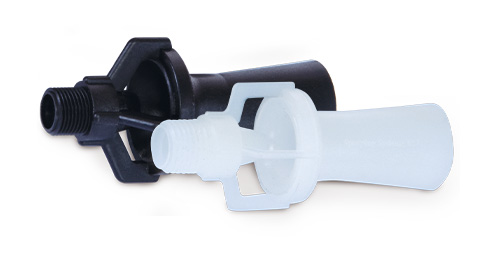
Eductors
Eductor nozzles, also known as tank mixing eductors, are engineered to improve fluid mixing and agitation inside a tank. Operating on the Venturi principle, an eductor uses a high-velocity jet to entrain the surrounding liquid, multiplying total flow and driving uniform mixing throughout the vessel.
Temperature control is frequently overlooked in tanks and chests. Eductors keep low-velocity plumes of liquid moving across the full volume, which prevents localized hot spots and breaks up areas of high caustic concentration. The result is fewer of the localized conditions that drive corrosion.
Effective mixing targets uniform temperature and chemistry, not just bulk turnover. Poor circulation produces stagnant zones, concentration gradients, and vapor-liquid interface attack, all of which can accelerate corrosion in carbon steel, stainless steel and welds.
Discovery items:
- Confirm tank volume, liquor temperature, and density.
- Document solids and deposit loading.
- Map inlet and outlet locations and any existing agitators.
- Identify nozzle materials of construction.
- Note whether the tank has known dead zones or prior inspection findings.
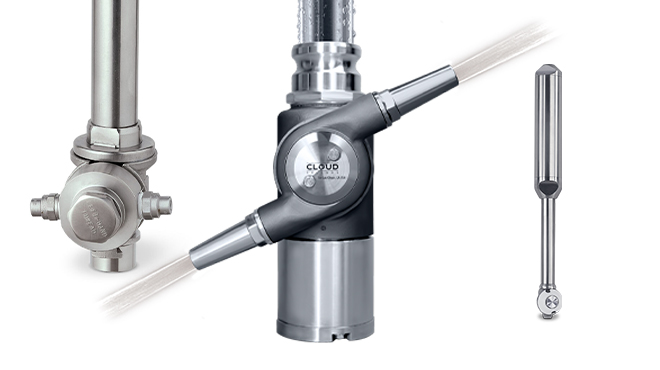
Tank Cleaning Machines
Cleaning should keep the shell, roof, vents, overflow lines, level instrumentation, and suction and discharge areas clear enough for reliable operation and inspection. Deposits do more than reduce efficiency. They can hide active corrosion, restrict vent capacity, and create pockets of localized chemistry that attack carbon steel.
Automated tank cleaning machines deliver the impact, coverage, and repeatability needed to keep critical surfaces clean while reducing manual cleaning and confined-space entry. Consistent cleaning also makes inspection findings more reliable, because inspectors can evaluate the vessel wall rather than a layer of buildup.
Intermittent Use of Localized Spray Nozzles
Vacuum and pressure-induced failures, including vessel collapse, can often be prevented by intermittently spraying nozzles at known buildup points. Targeted spraying keeps vents, overflow piping, and instrumentation clear so pressure and vacuum relief paths stay open.
One caution matters here. Avoid spraying with fluid that differs sharply in temperature from the tank contents. Large temperature swings can thermally shock the system and stress the vessel. Matching spray temperature to process conditions protects both the equipment and the operation.
Discovery items:
-
Identify where scale, lime mud, dregs, or crystallized salts accumulate.
-
Determine whether buildup affects PVRVs, gooseneck vents, overflow piping, level taps, roof nozzles, or manways.
-
Confirm whether cleaning can be performed without thermal shock or unsafe operator exposure.
Reliability Starts with Clean Tanks
Spraying Systems Co. offers a deep line of highly engineered nozzles and tank cleaning machines designed specifically for pulp and paper mills. Applied correctly, this equipment supports risk mitigation across the kraft recovery process. Clean, well-mixed, and properly maintained tanks lead to safer operations, more reliable inspections, and the consistent, high-quality pulp that recovery operations depend on.
Prefer our content in Google?