

Oil & Gas Spray Applications
Precision spray technology plays a critical role across every stage of oil and gas processing, from crude distillation through to emissions control and tank management. The operational demands of refineries and petrochemical facilities require spray solutions that perform reliably under extreme temperatures, pressures, and process conditions. Spraying Systems Co. brings deep process knowledge and an extensive portfolio of spray nozzles, headers, and automated systems designed specifically for the challenges of the oil and gas industry in Europe and worldwide.


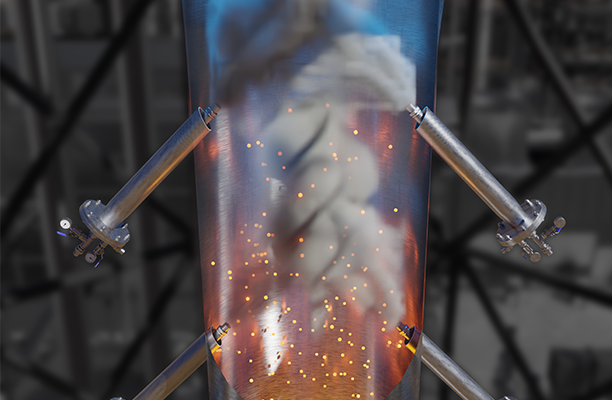
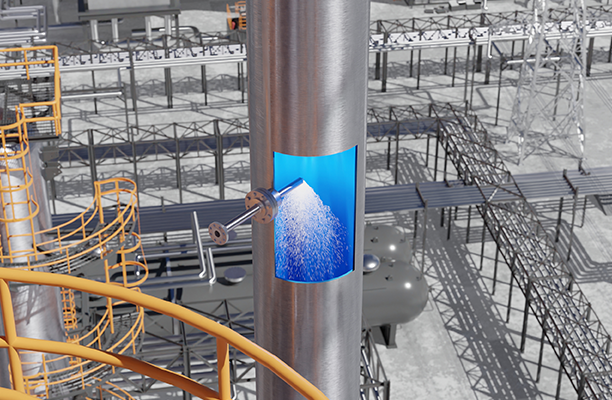
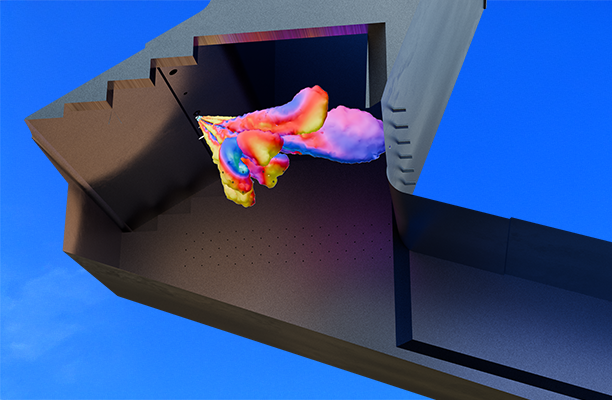




Crude Distillation Unit
Crude distillation units subject spray nozzles to some of the most aggressive service conditions in a refinery, including high-temperature overhead vapor streams, chloride-laden condensate, and corrosive wash water. Fouling and corrosion of the overhead system are among the most common causes of unplanned shutdowns, and spray nozzles used in water wash and chemical injection service are a primary line of defense. Spraying Systems Co. supplies precision-engineered nozzles in corrosion-resistant alloys that deliver consistent coverage and droplet characteristics to neutralize acidic species, reduce corrosion rates on overhead pipework and condensers, and support reliable desalter operation.
Find out more about spray applications for the Crude Distillation Unit.

Fluid Catalytic Cracking Unit
Fluid catalytic cracking units demand spray nozzles that can handle heavy, abrasive feed streams while delivering precise atomization for feed injection and catalyst cooling. In the feed injection system, spray nozzle design directly influences the quality of feed-catalyst contact, with consequences for conversion efficiency and coke yield. Spraying Systems Co. provides FCC feed injection nozzles engineered to produce the droplet size and velocity profile required for optimal vaporization, along with robust construction to withstand the erosive and thermal demands of the riser environment.
Find out more about spray applications for the Fluid Catalytic Cracking Unit.

Coker
Coking operations present unique challenges for spray systems, particularly in quench and cutting water service where nozzles must handle coke-laden water under high-pressure and high-temperature conditions. Nozzle plugging and erosion are persistent problems when spray components are not specifically designed for these duties. Spraying Systems Co. offers coker service nozzles and headers built with wide-passage, self-draining geometries and hard-wearing materials that maintain consistent flow and pattern performance over extended service intervals, reducing the frequency of maintenance interventions and helping sustain coker throughput.

Hydrotreater
Hydrotreating processes depend on effective water wash injection to prevent ammonium salt deposition in reactor effluent air coolers, a leading cause of corrosion and fouling-related failures in this service. The spray nozzle's ability to produce fine, uniformly distributed water droplets that evaporate quickly and wash salt deposits from tube surfaces is critical to keeping heat exchangers on-stream. Spraying Systems Co. designs water wash injection nozzles for hydrotreater service that deliver the droplet size and distribution required to maximize washing effectiveness while avoiding liquid carryover that could cause corrosion or two-phase flow issues downstream.
Find out more about spray applications for the Hydrotreater.

Chemical Injection
Chemical injection across oil and gas processing, whether for corrosion inhibitors, neutralizing amines, demulsifiers, or antifoam agents, requires accurate, reliable dosing at the point of application. Poorly performing injection quills and nozzles lead to uneven chemical distribution, localized corrosion, and higher chemical consumption without proportional process benefit. Spraying Systems Co. provides chemical injection nozzles and quills engineered to ensure repeatable distribution across the full pipe cross-section or vessel interior, manufactured in materials compatible with the specific chemical duty and process conditions encountered in each application.
Find out more about spray applications for Chemical Injection.

Water Wash for Oil and Gas
Water wash systems are used throughout refinery processing to remove salts, acids, and other contaminants from process streams before they cause corrosion or fouling in downstream equipment. The effectiveness of a water wash depends on achieving thorough mixing and contact between the wash water and the process stream, which in turn depends on nozzle spray angle, droplet size, and injection velocity. Spraying Systems Co. designs water wash injection nozzles that maximize contact efficiency while remaining resistant to plugging and wear, supporting sustained equipment protection between turnarounds.

Quenching and Gas Cooling
Rapid and controlled gas quenching is essential in processes such as delayed coking, fluid coking, and thermal cracking, where hot process gases must be cooled quickly to prevent unwanted downstream reactions or thermal damage to equipment. Scrubbing systems in oil and gas service also rely on spray technology to remove particulates, acid gases, and other contaminants from gas streams before they are emitted or passed to further processing. Spraying Systems Co. supplies quench and scrubbing nozzles that deliver the droplet size distribution, coverage, and liquid flow capacity required for effective heat transfer and contaminant removal under demanding process conditions.
Find out more about Quenching and Gas Cooling in the Oil and Gas Industry.

Sulfur Burning
In sulfur recovery units, the combustion of hydrogen sulfide and the management of sulfur byproducts require spray systems capable of handling corrosive, high-temperature media reliably. Spray nozzles used in sulfur pit heating, sulfur pumping, and tail gas treatment must maintain consistent performance to support sulfur recovery efficiency and environmental compliance. Spraying Systems Co. provides nozzles and headers for sulfur burning service in materials selected to withstand the corrosive and thermal demands of this process, with flow and pattern characteristics matched to the specific combustion and process requirements of each installation.
Find out more about Sulfur Burning in the Oil and Gas Industry.

Heat Exchanger Fouling Prevention
Fouling on heat exchanger surfaces is one of the most significant contributors to energy loss, reduced throughput, and unplanned maintenance in oil and gas facilities. Spray cleaning and online chemical injection systems help mitigate fouling by delivering cleaning agents or water directly to exchanger tube bundles at controlled flow rates and pressures, maintaining thermal performance between scheduled maintenance intervals. Spraying Systems Co. designs spray systems for heat exchanger fouling prevention that are engineered around the specific geometry and process conditions of each exchanger, with nozzle selection and header design optimized to achieve uniform coverage across the tube bundle.

Tank Management for Oil and Gas
Storage tank operations in oil and gas facilities require spray systems for a range of duties including tank cleaning, product blending, sludge reduction, and vapor suppression. Tank cleaning is a particularly demanding application, requiring rotating or stationary spray nozzles that deliver sufficient impact and coverage to remove deposits from tank walls and floors while minimizing water consumption. Spraying Systems Co. offers a comprehensive range of tank cleaning nozzles, from small static units for routine washdown to large-diameter rotary jet cleaners for heavy-deposit removal, all designed to reduce cleaning cycle times and water usage.

Denitrification for Refineries
Selective catalytic reduction and selective non-catalytic reduction systems used to control nitrogen oxide emissions from refinery and petrochemical heaters and furnaces depend on precise reagent injection to achieve the required NOx reduction. The spray nozzle's ability to produce a controlled droplet size and uniform distribution across the flue gas duct is directly linked to reagent utilization efficiency and compliance with emission limits. Spraying Systems Co. designs DeNOx injection lances and nozzle systems to match the flue gas temperature profile, flow velocity, and duct geometry of each installation, supporting consistent emission reduction performance across varying load conditions.

Get In Touch With Our Oil & Gas Spray Expert
With 15+ years of experience in process technologies, Roger Makhoul helps plants across oil & gas, fertilizer manufacturing, power generation, waste to energy, and chemical processing optimize their spray applications - from gas conditioning and emissions control to quenching, scrubbing, and injector system design. Working alongside our local spray specialists and spray labs, he'll guide you to validated nozzle, injector, and control solutions tailored to your process conditions and performance targets.
Click here to contact your Process Technologies Spray Expert and discuss the best solution for your needs.

Industrial Spray Applications Overview
- Food Processing Spray Applications
- Process Technologies Spray Applications
- Pulp and Paper Industry Spray Applications
- Steel and Non-Ferrous Metals Spray Applications
- Engineered Wood Spray Applications
- Glass Manufacturing Spray Applications
- Spray Applications for Electronics
- Spray Applications for Transportation Industries
- Fire Protection Spray Applications
- Insulation Spray Applications
- Tiles Manufacturing Spray Applications
Why it matters?
In oil and gas operations, the performance of a spray system is inseparable from the performance of the process itself. Whether cooling a fluid catalytic cracking unit, injecting chemicals to prevent corrosion in a crude distillation column, or managing water wash in a desalter, the spray nozzle is a direct contributor to yield, equipment integrity, and regulatory compliance. A nozzle that wears prematurely, clogs under high-viscosity flow, or delivers a suboptimal spray pattern can create costly process upsets, unplanned maintenance, and environmental risk.
Refineries and petrochemical plants across Europe face increasing pressure to operate more efficiently, reduce emissions, and extend the lifespan of critical assets. Spray technology contributes to all of these goals. Well-engineered spray solutions help stabilize process temperatures, reduce fouling on heat exchange surfaces, improve scrubbing efficiency, and support compliance with tightening environmental legislation. Selecting the right spray technology for each application is therefore not a procurement decision but a process engineering one, with measurable consequences for operational continuity and sustainability performance.
Understanding the Demands of Oil & Gas Spray Applications
The oil and gas processing environment is among the most demanding for spray technology. Nozzles and headers must withstand corrosive media, high-temperature steam, coke-laden slurries, and process streams carrying entrained solids. Material selection is critical: the wrong alloy or seal material can lead to rapid nozzle degradation, while an undersized orifice will clog under fouling service conditions. Process operators need spray components that maintain performance over extended run cycles without requiring frequent intervention, particularly in hard-to-access locations within reactors, towers, or heat exchangers.
Precise flow and spray pattern control adds another layer of complexity. In applications such as quenching and scrubbing, the ability to maintain a tight droplet size distribution across varying flow rates directly affects process temperature control and gas cleaning efficiency. In chemical injection service, accurate dosing is essential to both process protection and chemical cost management. Achieving consistent performance across a broad operating window, including turndown conditions, requires nozzles that are engineered for the specific hydraulic and process parameters of each application rather than selected from a generic catalog.
Emissions and environmental compliance present an increasing challenge for European oil and gas operators. Applications such as DeNOx systems, sulfur burning, and flue gas scrubbing rely on spray technology that delivers repeatable reagent distribution, correct droplet sizing, and uniform coverage to meet regulatory requirements. Designing spray systems for these duties requires a thorough understanding of both the spray engineering principles and the specific process chemistry involved, as well as the ability to validate performance through testing before installation.
Why Choose Spraying Systems Co. for Your Oil & Gas Spray Applications?
Spraying Systems Co. has worked alongside refineries, petrochemical plants, and gas processing facilities for decades, building a process-specific knowledge base that underpins every spray recommendation we make. With a portfolio of over a hundred thousand nozzle products and a team of application engineers experienced in oil and gas process conditions, we provide technically grounded solutions rather than off-the-shelf components. Our European operation combines local application support with access to global expertise, ensuring that customers receive guidance that is both regionally relevant and informed by proven technology from facilities worldwide.
Our in-house testing facilities allow us to validate spray performance before any system goes into service. We can replicate the flow conditions, pressures, and fluid properties of a customer's process, measure droplet size distribution, coverage uniformity, and flow rate accuracy, and confirm that the selected nozzle meets the required duty. This testing capability is particularly valuable in critical applications such as DeNOx reagent injection, quench cooling, and water wash systems, where spray performance directly governs process outcomes and compliance. Customers benefit from the confidence that comes from data rather than assumptions.
Sustainability and efficiency are at the core of how Spraying Systems Co. approaches process spray engineering. We design solutions that minimize water, chemical, and energy consumption while delivering the process performance required. Our automated spray control systems allow operators to adjust flow rates dynamically in response to process conditions, reducing waste and improving consistency. From initial application review through to nozzle selection, fabricated header design, and ongoing technical support, Spraying Systems Co. partners with oil and gas operators to improve the reliability and environmental profile of their spray applications.