

Spray Applications for Mining and Cement
Cement production and mining operations demand spray solutions that perform reliably in extreme temperatures, dust-laden environments, and continuous high-load processes. From conditioning towers and rotary kilns to ball mills and DeNox systems, precise spray technology plays a critical role in process stability, equipment protection, and emissions compliance. Spraying Systems Co. delivers application-specific spray solutions for the full range of cement and mining process challenges, backed by global expertise and local European support.




Gas Conditioning for Cement Plants
Process gases leaving the kiln and preheater tower carry high heat loads and particulate matter that must be conditioned before reaching downstream filtration equipment such as baghouses and electrostatic precipitators. Conditioning towers rely on evaporative cooling through precisely atomized water injection to bring gas temperatures within the required operating range of the filter. Incomplete evaporation leads to duct wetting, corrosion, and equipment fouling, while insufficient cooling reduces filtration efficiency and increases wear on downstream components. Spraying Systems Co. supplies high-performance twin-fluid and hydraulic nozzles, retractable lances, and automated control systems engineered to deliver consistent droplet size, full evaporation, and stable gas temperature control under continuous operation.

Ball Mill Cooling
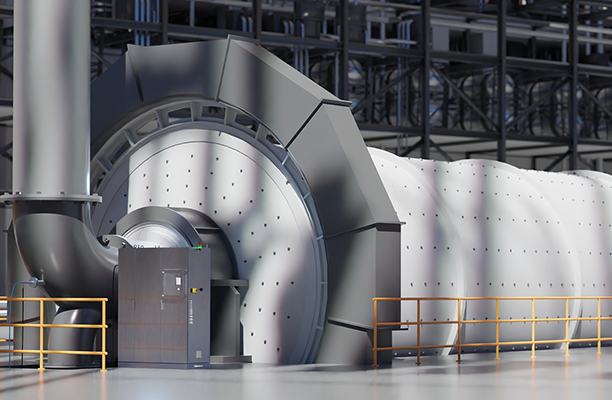
Grinding processes in ball mills and finish mills generate heat that raises mill outlet temperature above the threshold at which gypsum dehydration and cement quality degradation begin to occur. Water injection into the mill circuit provides direct evaporative cooling to maintain outlet temperature within the required range and prevent coating on grinding media and mill liners. Achieving consistent results requires the right nozzle selection, placement, and flow control to match the specific mill size, throughput, and operating conditions without introducing excess moisture that disrupts product quality. Spraying Systems Co. provides application-specific water injection systems for ball mill cooling that combine precise atomization with automated flow control to protect cement quality and improve grinding stability.

Rotary Kiln Cooling
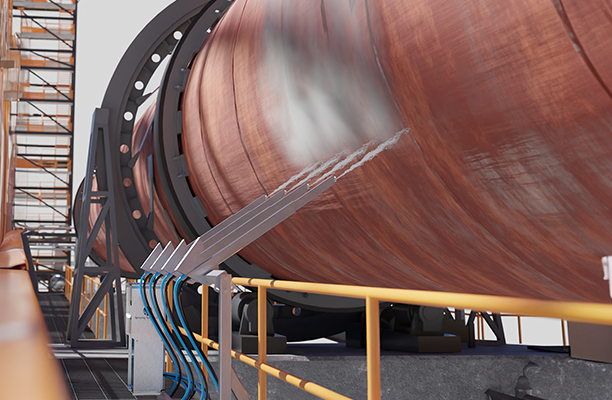
Rotary kiln shells operate under intense and continuous thermal stress, and localized overheating caused by refractory wear or damage creates hot spots that risk shell deformation, refractory failure, and unplanned kiln shutdowns. External water-spray cooling systems are used to manage kiln shell temperature in identified hot spot zones, providing targeted cooling that extends refractory and shell life while the kiln remains in operation. Effective kiln cooling requires precisely positioned spray fans that deliver controlled water coverage without thermal shock to the refractory lining. Spraying Systems Co. supplies automated kiln shell cooling systems with scanning and control integration, allowing operators to apply targeted spray cooling based on real-time temperature monitoring and protect kiln availability.

DeNox for Cement Plants
NOx emissions from cement kilns are subject to increasingly stringent environmental regulations across Europe, and selective non-catalytic reduction (SNCR) systems are widely used to reduce NOx concentrations in the calciner and kiln inlet zone. SNCR performance depends on reagent injection within a defined temperature window, combined with fine atomization that promotes rapid mixing and reaction while minimizing ammonia slip and reagent consumption. Injecting reagent outside the optimal temperature range or with incorrect droplet sizing reduces NOx conversion efficiency and risks regulatory non-compliance. Spraying Systems Co. provides DeNox injection systems with application-specific lance and nozzle configurations designed to deliver reagent at the correct droplet size, penetration depth, and distribution within the process temperature window of the cement plant.

Sulfur Burning
Sulfur burning processes used in sulfuric acid production and related chemical operations require reliable liquid atomization of molten or dissolved sulfur combined with gas cooling and absorption support across a process environment defined by high temperatures and aggressive chemical conditions. Nozzle and lance systems operating in sulfur burning applications must withstand corrosive acid exposure, elevated temperatures, and the risk of plugging from solidified material, while maintaining precise and consistent spray performance. Material selection, nozzle design, and system configuration are critical to reliable operation and safe sulfur combustion. Spraying Systems Co. supplies spray systems for sulfur burning applications with materials and designs matched to acid and sulfur service conditions, delivering reliable atomization and process support across the sulfur burning cycle.

Get In Touch With Our Mining and Cement Spray Expert
With 15+ years of experience in process technologies, Roger Makhoul helps plants across oil & gas, fertilizer manufacturing, power generation, waste to energy, and chemical processing optimize their spray applications - from gas conditioning and emissions control to quenching, scrubbing, and injector system design. Working alongside our local spray specialists and spray labs, he'll guide you to validated nozzle, injector, and control solutions tailored to your process conditions and performance targets.
Click here to contact your Process Technologies Spray Expert and discuss the best solution for your needs.

Industrial Spray Applications Overview
- Food Processing Spray Applications
- Process Technologies Spray Applications
- Pulp and Paper Industry Spray Applications
- Steel and Non-Ferrous Metals Spray Applications
- Engineered Wood Spray Applications
- Glass Manufacturing Spray Applications
- Spray Applications for Electronics
- Spray Applications for Transportation Industries
- Fire Protection Spray Applications
- Insulation Spray Applications
- Tiles Manufacturing Spray Applications
Why Spray Optimization Matters in Cement and Mining?
In cement plants and mining operations, spray performance directly affects process outcomes. A poorly atomized droplet in a conditioning tower fails to evaporate fully before reaching downstream equipment, leading to duct corrosion, baghouse damage, or ESP underperformance. Incorrect water injection into a ball mill raises outlet temperature and risks coating and agglomeration, compromising both cement quality and grinding efficiency. The margin for error in these environments is narrow, and the consequences of spray failure are measurable in downtime, energy consumption, and product consistency.
Optimized spray technology addresses each process stage with the right nozzle type, droplet size, flow rate, and spray pattern for the specific operating conditions. Whether the goal is precise gas cooling, controlled moisture addition, targeted reagent injection, or refractory protection, the spray system must perform consistently in harsh conditions over extended operating cycles. Reducing water consumption, protecting critical equipment, and maintaining stable process temperatures are all directly achievable through application-specific spray engineering.
Key Challenges in Cement and Mining Spray Applications
Cement and mining environments present a demanding combination of process, mechanical, and environmental challenges that require spray solutions designed specifically for these conditions.
- High-temperature process gas streams in kilns, calciners, and conditioning towers require nozzles and lances that deliver reliable atomization without failure under sustained thermal stress.
- Dust-laden gases and solids buildup accelerate nozzle wear and clogging, reducing spray coverage and requiring more frequent maintenance interventions.
- Inconsistent evaporation in gas conditioning towers creates the risk of moisture carryover, duct wetting, and downstream equipment corrosion.
- Uncontrolled mill outlet temperatures in ball mills and finish mills lead to coating, agglomeration, and reduced grinding efficiency, directly affecting cement quality.
- Kiln shell hot spots caused by refractory degradation require rapid, targeted external cooling to prevent unplanned shutdowns and protect kiln integrity.
- NOx reduction in cement calciners requires precise reagent injection within a defined temperature window, with tight control over droplet size and distribution to minimize ammonia slip.
- Sulfur burning and acid plant processes involve aggressive chemical environments that demand corrosion-resistant materials and atomization systems capable of sustained performance.
- Access constraints in preheater towers, kiln areas, and mill ducting require compact, retractable, or remotely operated lance and nozzle designs.