

Precision Spraying for Living Architecture: How We Supported ETH Zürich’s DAFNE Installation at Triennale Milano

3
Δεκ 25
We recently received an unusual and exciting request from the research team at ETH Zürich. As part of their contribution to the 2025 Triennale Milano, they were developing DAFNE, an experimental installation built from biologically active wood enriched with living microalgae and bacteria.
The challenge they were facing was anything but ordinary.
To keep their living canopy thriving, the installation required a misting system capable of delivering ultra-fine moisture with absolute precision. Even the slightest overspray risked damaging sensitive architectural elements or disrupting the tightly controlled environmental balance.
Previous spray suppliers struggled on two fronts: the technical complexity of the application and the need for responsive, real-time support throughout the build and exhibition period.
ETH needed a partner able to handle both.
The Problem
The microorganisms, Tetradesmus deserticola and Azospirillum brasilense, could only survive under very specific moisture levels. Too little hydration, and the biological layer would dry out. Too much, and water would run down the wooden structure, compromising both aesthetics and function.
The requirements were crystal clear:
- Deliver a stable, ultra-fine mist without droplets
- Avoid wetting walls, surroundings, or equipment
- Operate reliably inside a robotic, sensor-driven environment
- Allow for precise positioning within a complex, curved architectural form
- Provide on-the-ground support during setup and integration
No room for guesswork. No tolerance for interruptions. Everything had to work flawlessly in a public exhibition setting.
Solution
With decades of experience in spray technology, and a long track record of supporting precision-dependent industries, we were uniquely positioned to help.
Rather than relying on high-spec controllers or automated panels, we proposed a practical, robust, and easy-to-maintain system: a manual pressure tank feeding multiple MiniFogger units equipped with extended arms. This combination delivered several advantages: During installation, our team worked closely with ETH’s engineers to ensure seamless integration into their robotic and sensor-controlled setup. This hands-on support was essential for meeting the project’s strict tolerances and timing. ETH Zürich ultimately recognized Spraying Systems Co. publicly as their spray technology partner across on-site materials and communications, a testament to the collaboration.
Result
The misting system performed reliably throughout the entire Triennale Milano exhibition. Moisture levels across the living wood surface remained uniform, enabling the microorganisms to grow and flourish exactly as intended. Key outcomes included: ETH Zürich confirmed that the solution delivered precisely what they needed: controlled hydration, clean operation, and dependable long-term performance. The project demonstrated not only the adaptability of our spray technology but also its ability to support unconventional, research-driven, and biologically sensitive applications. In short, a living architecture experiment required a living, breathing level of precision, and we were proud to help make it possible.
A closer look at the system
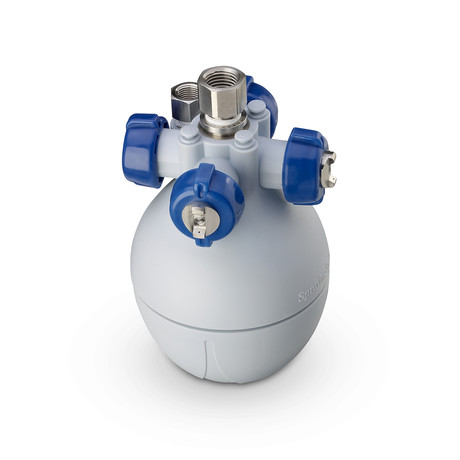 |
MiniFogger units with extended arms Low-pressure fogging nozzles
|
Prefer our content in Google?